Reflections On The Assassination of John F Kennedy
About Lee Oswald, Oliver Stone, the CIA, Kantbot & the nature of conspiracy

“A conspiracy theorist dies & goes to heaven. He comes face to face with God, and is permitted to ask Him anything. Th man asks: Who killed Kennedy? God replies: Lee Harvey Oswald, and he acted alone. Man pauses, then says: This goes even higher up than I thought ...”1
This article began as a review of Case Closed by Gerald Posner, a major anti-conspiracy tract about Lee Harvey Oswald & the Kennedy assassination, but I want to use the opportunity to discuss the topic more generally. The book attempts an categorical refutation of all counterarguments to the official narrative; it was written in direct response to Oliver Stone’s film JFK (1991)2, which is itself primarily an exposition of conspiracy research into the assassination. I’ve recently studied this & surrounding conspiracy theories from a variety of further sources3, including Don Delillo’s novel Libra (I wrote a shorter article about it, which serves as a preamble to this one) & Kantbot’s parapolitics podcast. Given my wide variety of sources, I will divide this article into three parts: first, a review of the Posner book; second, a general discussion of Oliver Stone; and third, a longer reflection on the Kennedy assassination & conspiracy theories writ large.
A disclaimer: this article took me a long time to write, and is more concerned with matters of hard fact & evidence with which I was less familiar than the aesthetic or philosophical topics I normally discuss. I have tried my very best to ensure that the quality of information in this piece is rigorously solid, but it is possible there are some misrepresentations. Moreover, dipping my toes into online forums while fact checking my claims of this article, I think there is vastly more to say & show about this saga than I could have possibly fit into this article. While I do intend to write more about politics & history in the future, I’m not sure I want to write something so investigative as this piece again.
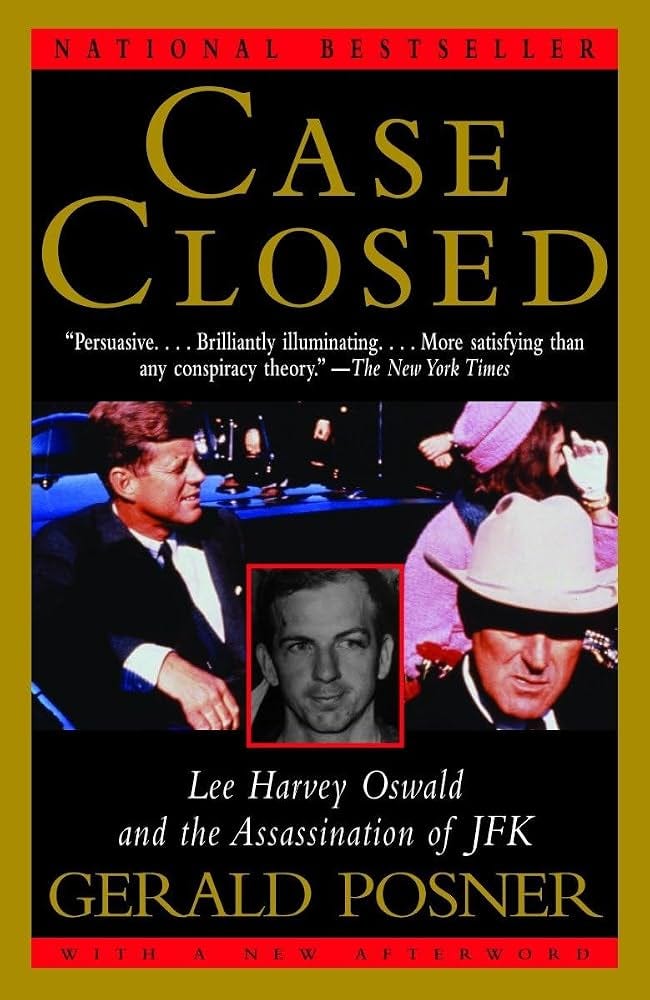
Case Closed by Gerald Posner
Case Closed is an attempt to refute all conspiracies about the assassination of Kennedy. While the book frequently pauses to discuss & critique various popular theories, Gerald Posner focuses on expounding the official narrative (that is, the findings of the Warren Commission) in careful detail: the aim is to show that Lee Harvey Oswald was both able & willing to carry out the assassination alone and, thus, to preclude the possibility of any conspiracy. As such, approximately two-thirds of this book is devoted to a complete biography of Lee Oswald4.
Oswald, by this very carefully documented account, was a disturbed & pathetic man: raised alone by a single mother who at once spoiled & neglected him, he grew into a manic-depressive youth prone to spontaneous decisions, temper tantrums & other unstable behaviors. In his teenage years, he became enamored with Karl Marx & socialism, which he studied independently, developing an highly idiosyncratic & anarchist-like interpretation of communism. By the time he became an adult, he was heavily mired in a radical political pessimism, which amounted to the narcissistic theory that all society was cruel & oppressive against all, but especially those like himself. After enlisting in the Marines, he defected to Russia to live under his ideal ideology, but quickly found Soviet communism no less oppressive & persecutorial; he, along with his newly-wed Russian wife, Marina, soon returned to America.
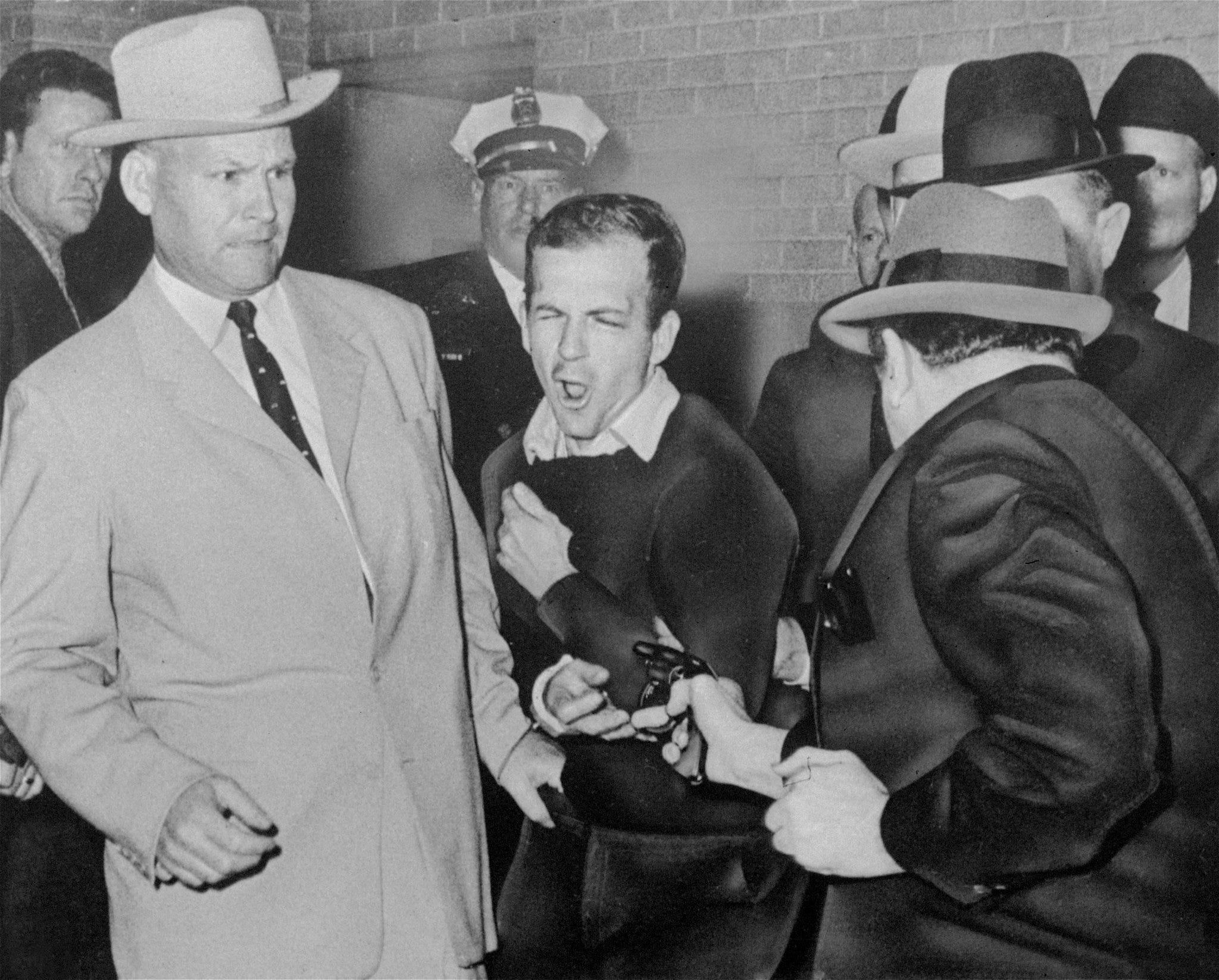
There, Oswald moved back & forth between Louisiana & Texas, involving himself with liberal White Russian émigré communities (who mostly disliked him, but were eager to integrate the native Russian Marina) in Dallas, and a pro-Castro organization he founded (of which he was the only member & where he was frequently humiliated by losing public debates & street brawls with anti-Castro Cuban exiles) in New Orleans. Oswald beat his wife relentlessly5, and the couple frequently became estranged; perhaps as a result, Oswald began pursuing more radical endeavors, such as failing to assassinate a right-wing public figure (General Edwin Walker) & attempting to defect to Cuba, before finally seizing on a chance opportunity to assassinate President Kennedy, after learning a Presidential parade would pass below the window of his workplace. After shooting Kennedy, Oswald fled, shot dead a police officer who stopped him & then was finally arrested; he claimed to be a ‘patsy’, though provided no details. During a custody transfer, he was himself shot dead by a spastic nightclub owner, Jack Ruby, who was extremely upset at the death of his beloved President Kennedy. Oswald was twenty-four years old when he died.
All the facts of this case are attested by an enormous amount of evidence, including many diaries & letters from the assassin’s own hand. Oswald’s vagrant nature (frequently renting rooms, or writing letters asking to stay with family friends), as well as the fact that he had been under some degree of federal surveillance over his defection to Russia, allowed the Warren Commission & later efforts to track his (very few) friends, whereabouts & expenses almost perfectly, rivaling such figures as ‘Chris Chan’ in terms of precisely-documented biography. Conspiracist theories would require frequent trafficking between Oswald & whatever conspiracy might have plotted the assassination, but it seems difficult to find any place in Oswald’s life where he might have been so groomed; in the weeks leading up to the assassination, there is an abundance of evidence suggesting that he did very little but travel between work & home, particularly because he was staying at an hotel-like accommodation with check-in logs & many attesting witnesses.
Posner’s conclusion, then, is that Oswald appears by all evidence to have intended to kill the President for private ideological reasons, to have therefore killed the President & to have had no demonstrable involvement with any kind of conspiracy; therefore, the strength of evidence leads very firmly to the conclusion that Oswald killed Kennedy & acted alone.
The remainder of the book discusses a variety of conspiracy favorites: ‘cutting edge’ computer enhancement (for the early 90s) of the Zapruder film & other tapes are presented as definitive refutation of various claims about extra gunshots or weirdly-angling bullets6; various explanations are given for the haste & rare errors of the Warren Report (mostly to do with time pressure); a variety of counter-witnesses are refuted by reference to their demonstrable unreliability or paradoxical claims.
Posner devotes an entire chapter to refute the theories of Jim Garrison, the Louisiana attorney who serves as the protagonist of Oliver Stone’s JFK (1991), deflating him (credibly) as a already-corrupt attorney desperate for political celebrity, who coerced & even drugged the testimony of his very few already-specious witnesses. A final chapter refutes (also very credibly) any potential mafioso conspiracies, although it does reveal the amusing fact that the only figure who seems to have had any intention to conspire to kill a Kennedy (if Robert F Kennedy Sr, not John F Kennedy) was Teamster Union boss Jimmy Hoffa: after complaining that Robert F Kennedy should be “blown to pieces”, some Teamster goons assembled a plan to do so & presented it to Hoffa, who rejected it & explained that his rant had merely been a frustrated joke. Such is life in New Orleans, and in labor unions7.
To me, the main value of Posner’s book consists in its extensive biography of Oswald, offering a highly detailed portrait of a tortured mid-wit cast-off, as well as in the exhaustive footnotes providing refutation to nearly every conspiracy theory. I find Posner’s anti-conspiratorial refutations fundamentally sound, although frequently unsatisfactory: all too often is he overly eager to present the mainstream position, then present auspicious claims & merely dispel them as ‘coincidences’ or ‘without evidence’, discussing the view alternate no further. For ridiculous cases such as extremely bizarre sightings of Oswald clones by witnesses who spoke up only in the late 70s, this makes sense; when it comes to unsettling degrees of overlap with notorious intelligence-affiliated figures, I don’t think this standard of refutation is sufficient to truly ‘close’ this case.
Additionally, Posner dismisses the claims of many witnesses purely on basis of character, often engaging in mean-spirited & wholesale dismissal of testimony made by those who were alcoholic, eccentric or sometimes simply only receiving therapy for mundane issues. While there is obviously good reason to discredit many of these witnesses, and much of what makes Oliver Stone’s film so entertaining is the fun of watching the zany witnesses brought to life on screen, I think any definitive refutation of all conspiracies would need to more seriously engage with some of the tenably-plausible theories of conspiracists in order to truly settle the matter once and for all. Nevertheless, the book is quite successful in what it sets out to do, and provides its readers with a pretty definitive set of arguments to refute many of the most common confusions about the death of Kennedy8.
The Films of Oliver Stone
The virulence of Posner’s tone throughout the book, which sometimes seems almost vengeful toward the very existence of theories differing from the official narrative, is somewhat at odds with the obvious dubiety of the niche conspiracy communities in which such theories propagate; while Posner is right to morally object to the harassment of clearly innocent figures such as Clay Shaw, those marginal figures & convention-attendees interested in Kennedy research are by & large benign autists, endearing in their commitment to researching tiny details & forming close-knit circles of geeky friendship. There is really no reason to truly hate such a fringe niche subculture. The main impetus for Posner’s frustration, and indeed the origin of his need to write a definitive refutation of conspiracy theories, was Oliver Stone’s film JFK (1991), which was the trigger for a renewed interest in the assassination during the 90s.
The film presents a slightly fictionalized account of the adventures of Jim Garrison, the Louisiana District Attorney who took it upon himself to use his legal authority to discover the truth behind the Kennedy assassination in the late 60s. The majority of the film consists in speculative speeches by Garrison & his interviews with witnesses, slowly exposing little bits of purported evidence that have proliferated about the assassination, all drawn from real-world testimony. After meeting a wide array of such bizarre figures, Garrison discovers a network of intelligence-adjacent actors, including David Ferrie, Guy Bannister & perhaps businessman Clay Shaw, who had both demonstrable proximity to Oswald as well as probable motive to slay Kennedy. Nevertheless, Garrison soon finds himself unable to get enough concrete information from his flakey & mentally unstable witnesses to produce any coherent theory of how or why Kennedy was assassinated. Garrison tries to persecute David Ferrie, who abruptly dies of a suspicious drug overdose not long after expressing a desire to cooperate; instead, he elects to persecute Clay Shaw, who was much less clearly involved, and whom a jury quickly acquits (despite conceding the possibility of a conspiracy).
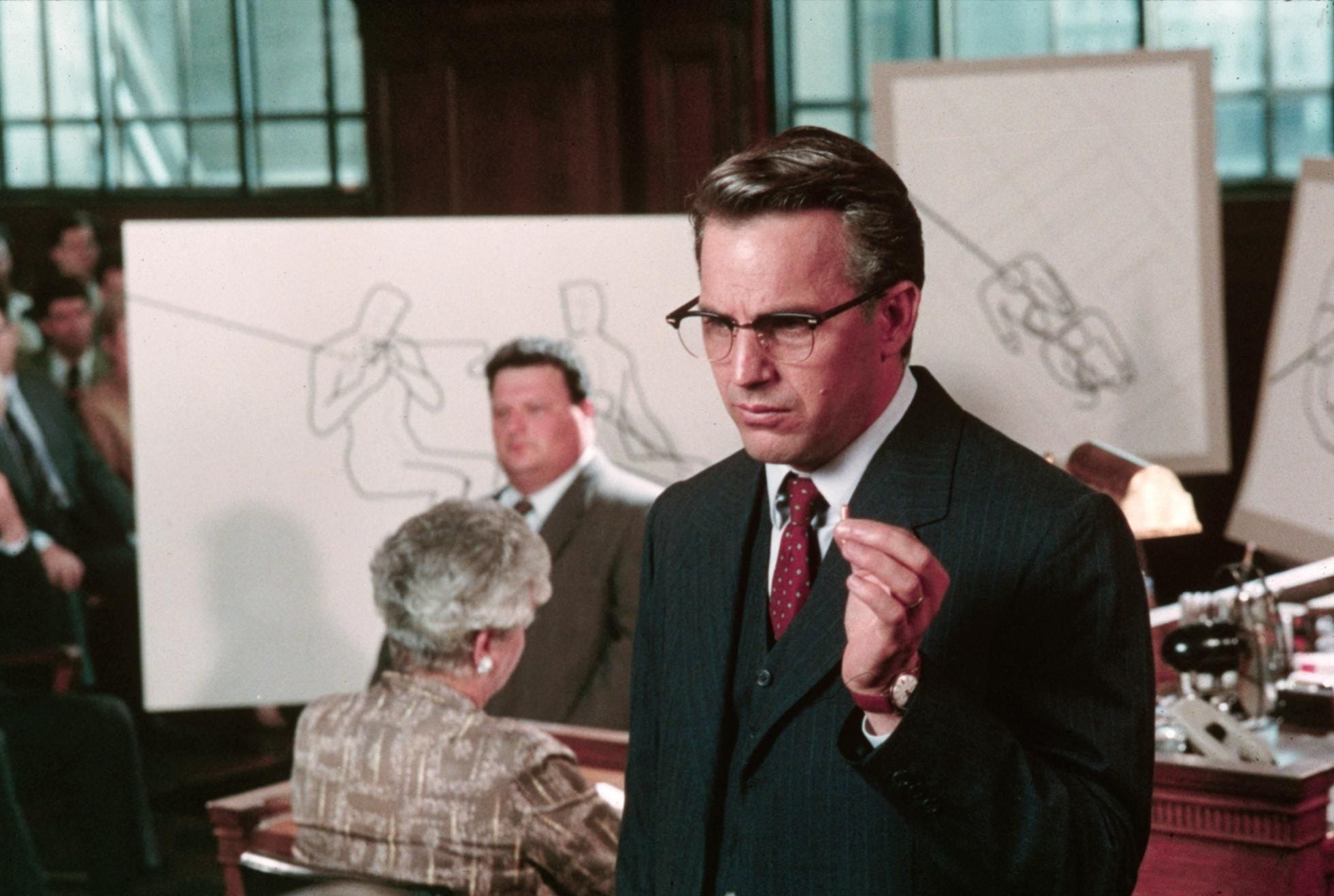
By the end of the film, Garrison’s entire staff has become a group of paranoiacs: each is equally persuaded that something strange happened, but nobody can agree on exactly what. They become irritable & neurotic, fighting amongst themselves & feeling mentally ill. Garrison himself has become estranged from his family, having neglected them during his obsessive investigations, and becomes a risible figure in the public eye, seen as a lunatic whose theories are constantly changing & becoming increasingly arcane. The idea of the film, of course, is to show the audience as much of the evidence as possible, and inspire them to research for themselves: it is an invective to the viewer to continue the task that Garrison could not complete.
To understand this film more clearly, it’s important to look at Oliver Stone’s personal views. A veteran of the Vietnam war, he developed a lifelong mistrust of the so-called Neo-Conservative establishment that has dictated US policy, more or less unimpeded, since the 1940s; over time, he became increasingly persuaded that the military-industrial complex was the root cause of all the evils which plague America. Stone places his main thesis in the mouth of a composite character, a Pentagon official who longs to confess his guilt to Garrison, if only anonymously: the truth, according to this character, is that all real political power in the United States is actually in the hands of a large network of military, intelligence & business figures that have quietly controlled all American institutions since the beginning of the Cold War. For them, democratic processes & public-facing institutions are merely illusory devices for administering this control; their aim is to profit from war & establish something resembling total control, although Stone seems to think their intentions are not fascistic, but merely a blind avarice for wealth & power.
The motivation for the assassination of the President, then, (as well as for the ousting of Nixon in the Watergate scandal, the supposedly staged Tonkin Gulf incident, the War On Terror, &c &c) was for the cabal to maintain its power over the US government: Stone asserts that Kennedy had intended to seize control of US military operations away from the Pentagon, as came to a head in the famous Bay of Pigs invasion (where Kennedy awkwardly limited a CIA effort to overthrow Fidel Castro), with the aim of dismantling the CIA & preventing a war in Vietnam. In reality, Kennedy intended to reorganize CIA principally for the purpose of reconstituting it with his own staff in order to conduct his own anti-communist intelligence operations; this seems to have been unknown to Stone, although it doesn’t necessarily change his thesis9.
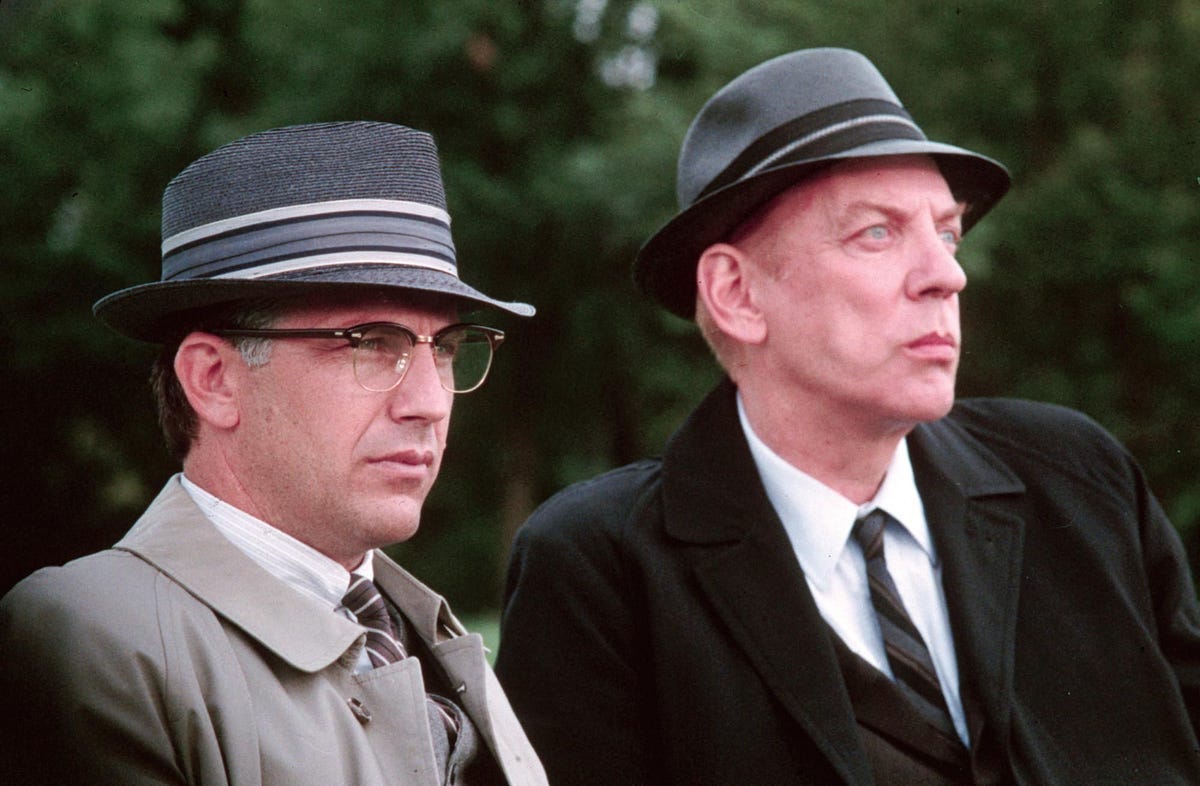
That the federal government relies on intelligence services, secret military strategy & other necessarily covert elements of bureaucracy confers a certain truth onto Stone’s feeling that many of the causal agents of political life are unknown & frequently unaccountable to the supposedly sovereign public. To paint an image of this as a profiteering illuminati is perhaps obfuscatory, yet to speculate about the inner machinations of the government is necessarily paranoid: it inherently relies on the possibility that mainstream data can be dubious or incomplete, and requires anyone seeking the full truth to become an eisegete, superimposing shadow narratives onto public-facing official accounts. This conflict, between a consuming paranoia & a burning desire to restore truth & goodness into the world, is the basic motivating tension of Stone’s filmography. At no point does JFK (1991) ever imply it has a complete theory about the assassination of Kennedy, or even any definitive proof that the official narrative is false: instead, it only endeavors to show the evidence, to promote the art of parapolitical research by illustrating how it works & to bring the viewers into unsettling aporia about the official narrative.
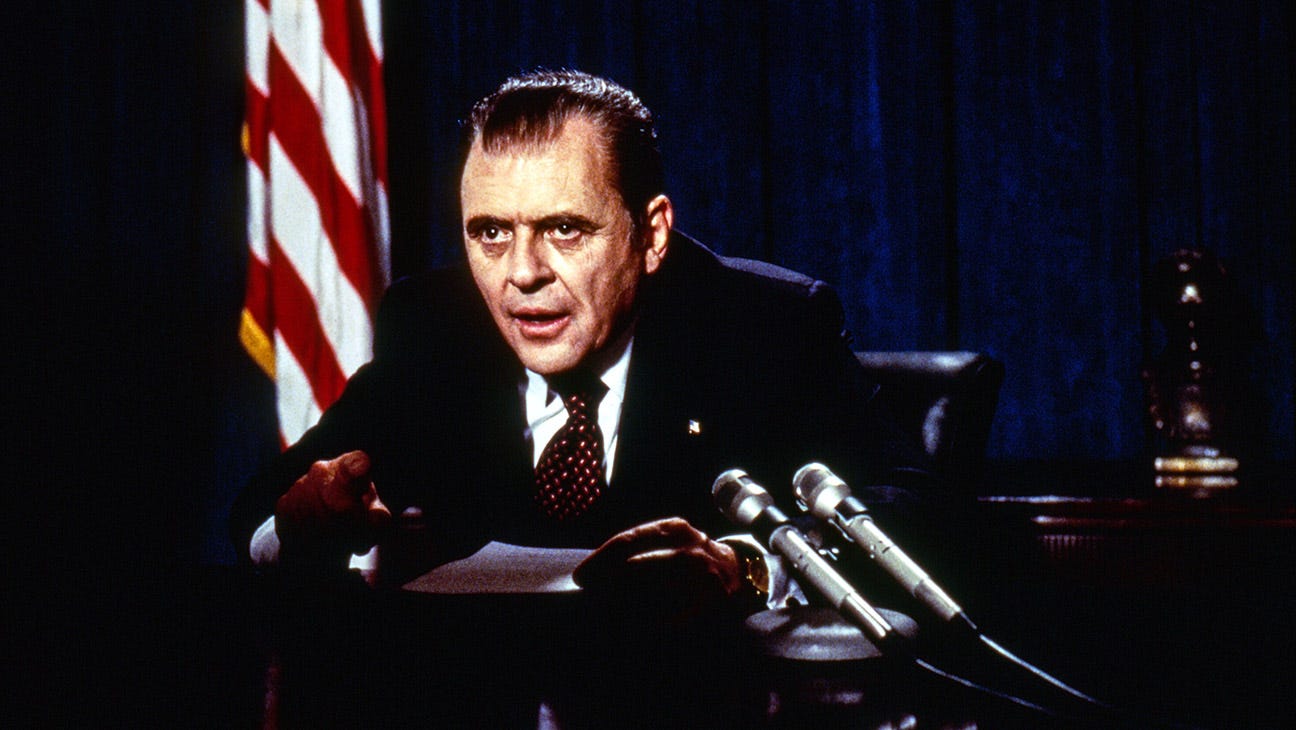
In the successor film by Stone, Nixon (1995), this paranoid narrative structure is taken further: the life of Richard Nixon is told in a total collage of incomplete scene-fragments, jumping around between different periods of his life. Nixon is depicted as an emotionally upset individual, bothered by a difficult childhood & socially stunted, but who nevertheless wants to pursue political greatness with a genuine, if monomaniac, drive. As he ascends toward the Presidency, however, he begins to be beset by strange disruptions: the 1960 election is rigged against him10, his victory in 1968 is encouraged by strange operatives, his efforts to reform the CIA or withdraw from Vietnam face obscure difficulties & he is soon destroyed by intelligence blackmail during the Watergate crisis.
Throughout the film, Nixon is never quite able to discover the nature of the political system (or voting public) he is trying to master, nor can he discover exactly who, or what, is behind the plot against him; Oliver Stone depicts an anti-Nixon conspiracy as definitely real but ultimately nebulous. The nightmarish fever-dream atmosphere culminates in an almost intolerable mania, as a tired, frantic & drug-addled Nixon breaks down in hysteric tears, asking: Why don’t they like me? For Stone, Nixon’s efforts at military & intelligence reform led, as with Kennedy, to his downfall; the ultimate tragedy is that he was thus falsely vilified by the American people, which the awkward, duplicitous-seeming & probably autistic Nixon had always been trying in earnest to impress & defend.
For a director that emerged from Hollywood & who seems mostly known for his outspoken political dubieties, these films are extremely rich in their evocative psycho-dramatic construction; a Lacanian could easily translate this into some manner of algebraically-demonstrable labyrinth, with a Reality Principle, unconscious trauma & likely even gender problems, but we do not have time for that sort of business here. Rather, here it is most interesting to note that these excellent films can be (& are) greatly enjoyed even by the staunchest of anti-conspiratorialists, despite the fact that their content & even very structure are literally, in themselves, conspiracy theories: engaging with such theories offers a profoundly attractive aesthetic pleasure verging on a perverted sublime, in which the unfathomable infinity of existence overwhelms & terrifies the mind11.
The Assassination
Thus, in the competition between conspiracy theorists & the mainstream narrative, we do not have so much a case of two separate accounts of history, but rather a scenario where the (somewhat) rational order of operative life is challenged by paranoia: this is made meaningfully plausible when, as often, official narratives are plagued by a large number of extremely bizarre data-points, which invariably produce confusion & uncertainty. The reproach of the mainstream, naturally, is that the so-called ‘discrepancies’ derive, in great part, from totally unreliable sources & ridiculous leaps of logic; the conspiracist can counter-reproach that, even granting this, parapolitical theories often point to highly persuasive narratives compatible with the unambiguously settled facts, such that these theories at least merit serious & profound investigation.
This paranoid tendency, both in the case of the Kennedy assassination & of conspiratorial thought in general, is sufficiently wide-spread & entrenched that we need seriously to reckon, if only to disprove the paranoid, with the the possibility that we live in an alternate world: namely, the alternate world in which some elements or associates of the US intelligence apparatus manipulated Oswald to assassinate Kennedy (or used him as a patsy, &c &c) and, moreover, the world in which this sort of thing happens frequently & determines much of history. Disregarding the more extreme or outlandish theories that anti-conspiracists often cite as examples to discredit conspiracies as a whole, I think this rogue-intelligence theory is the view that most conspiracists believe, at least as regards Kennedy, and the one most plausible given the concrete facts.
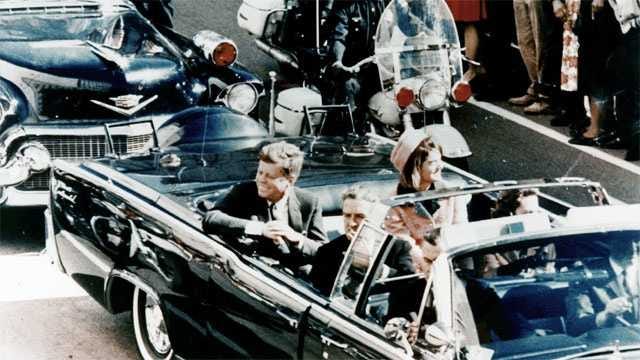
The best counterargument to the conspiracist position is the sheer abundance of testimony about Oswald: the credible evidence concerning his whereabouts & activities is extremely consistent, such that nearly every employer, landlady, neighbor & family member of Oswald’s (let alone the crowd present for the assassination) would have required enormous quantities of coaching to remain consistent in their lies; they would have needed to repeat this disinformation not only to the Warren Commission, but also to the wide variety of researchers, documentarians & interviewers of the subsequent half-century. Most dissenting witnesses expressed their testimony only in the late 70s or later, after fifteen years of conspiracy theories were popularly disseminated. A great deal of the claims presented in JFK (1991) were misleadingly culled from such dubious latter-day sources; indeed, many supposed witnesses surfaced to support Garrison’s theories only after he had independently invented them without evidence. While it may be possible to argue, as Oliver Stone does, that dissenting witnesses were categorically suppressed, testimonies altered & retroactive sources of information created, the sheer abundance of good evidence & witnesses supporting the mainstream conclusion, in contrast to the relatively few dissenters, makes any wildly discrepant theory highly dubious by any serious standard of rigor.
It is abundantly clear, then, that the basic truth of the official narrative is sound: Oswald was a stupid & bad-tempered person who obsessively believed in his garbled & narcissistic understanding of anarcho-marxism, and therefore decided to kill Kennedy for ideological glory. It seems difficult for a person as obstinate as Oswald to sustain an ideological play-acting role for years on end. One meets, from time to time, this type of political hyper-narcissist, who obsesses monomaniacally about his positions & ideology, yet clearly understands little more about politics than that it is a means of acquiring popularity & respect (or, often, merely attention), and who sustains this persona with unbelievable levels of neurotic energy; while one could be forgiven for secretly hoping these deranged types are faking it, as it is rather sad to imagine entire lives wasted in such futile ideological grand-standing, it is so difficult to feign mental illness like this that any sort of theory alleging Oswald was a fake communist becomes highly dubious & basically non-credible.
Perhaps a better conspiracist theory would be that Oswald was not so much an agent or collaborator, but rather a useful idiot manipulated by intelligence operatives. However, to grant that Oswald was a politically-obsessed & nearly-psychotic narcissist who could be used as a plausible fall-guy is to grant that he was in fact the type of person extremely likely to attempt a political assassination independently anyways; therefore, the default position on the assassination should be that Oswald killed the President for his clearly identifiable private motives. The onus, then, falls upon the conspiracists to demonstrate the existence of a network that could have influenced Oswald. In the next section, then, I’ll try to ‘steel-man’ such an argument, or at least provide the best evidence for it that I can.
Two Strange Figures: David Ferrie & George de Morenschildt
In my opinion, the most plausible concrete conspiracist theory is that a network of intelligence agents (most likely a localized rogue faction), which included at least David Ferrie & Guy Bannister, coordinated the scheme to assassinate Kennedy. David Ferrie was a bizarre character who, after being ousted from his desired career as a priest on account of his homosexuality, became involved with Civilian Air Patrol (a military-adjacent organization), and then became became a militant anti-communist collaborating with anti-Cuban activism in New Orleans; Guy Bannister was an ex-FBI agent & private detective who ran the anti-Cuban organization12. These two worked together in an office building promoting anti-communism & opposing the Castro government; they are alleged to have had serious dealings with the mob, and potentially with various intelligence organizations.
A very small number of their associates, whose stories are considered unreliable on account of mental illness & paradoxical assertions, allege that Ferrie & Banniser collaborated with Oswald & plotted to kill Kennedy. Possible motivations could include resentment at Kennedy’s lack of anti-Castro action, the failure of the Bay of Pigs operations or even a special belief that Lyndon Johnson’s administration (or whoever they might have expected to win in 1964) might have been more favorable to their anti-communist hopes. David Ferrie himself testified, after the assassination, that he had vocally advocated for the death of Kennedy, though he had not meant it literally, in a moment of frustration about the administration’s foreign policy.
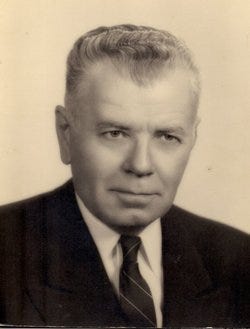
The best piece of evidence connecting Oswald with such a network dates from the former’s time living in New Orleans. Oswald had begun a pro-Cuba communist club there (although he failed to recruit any members other than himself) & printed a wide variety of leaflets listing random places as its headquarters, in an attempt to make his operation look more substantial than it really was. One of these pamphlets listed its address as Ferrie & Bannister’s office building: 544 Camp Street, New Orleans, LA. That Oswald would list this location in his fliers has absolutely no mainstream explanation; nevertheless, there is extremely little other hard evidence connecting Oswald to the location13.
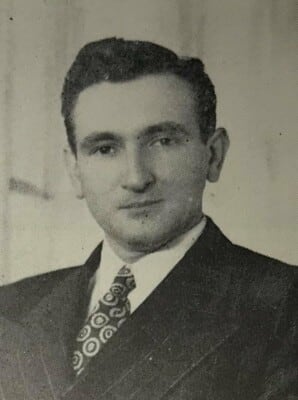
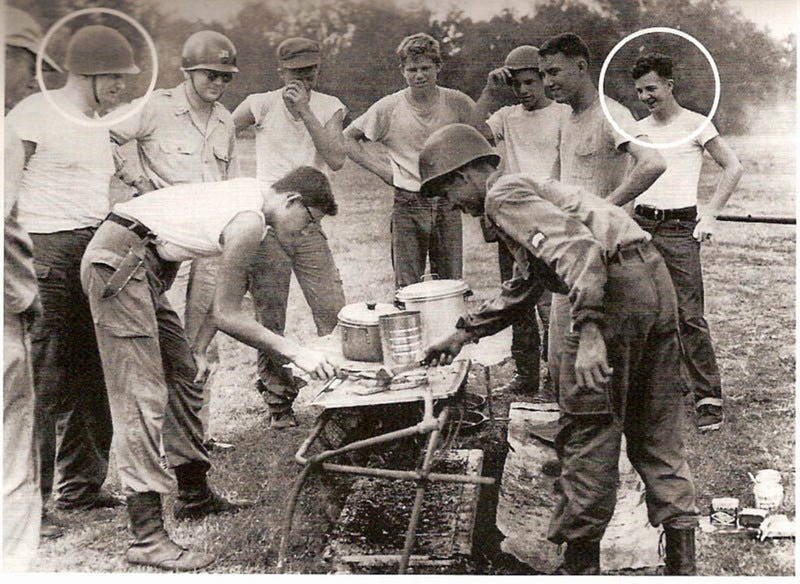
This is extremely bizarre when one considers that Oswald was a member of the Civilian Air Patrol as a young teenager, in the same section to which David Ferrie also belonged. In Case Closed, Posner attempts to claim that Ferrie was on an extended leave of absence from the club during the brief time Oswald was a member, but there exists a photograph (found only in recent years) of Oswald & Ferrie together at a barbecue, along with many others. As far as I can discern, the main anti-conspiracist argument about this is that a photograph of the two together in a group does not prove they knew one another, and that there is nothing else to suggest any lasting connection between Ferrie & Oswald between the date of the photograph & the date Oswald put down Ferrie’s address on his pamphlet.
As regards the address, Posner, who is otherwise extremely hostile to any attempt at speculation, is reduced to guessing (without evidence) that perhaps Oswald had been brought in for questioning by the vehemently anti-Castro Ferrie; Oswald, then, may have listed the location as petty revenge against a perceived political rival14. I think this view is relatively plausible: Oswald spent much of his time trying to agitate in public for his pro-Cuba cause, and was beginning to acquire reputation around this time15. That he might have been questioned by a substantial operation devoted to anti-Cuba activity seems possible, although one would think that this would have been documented somewhere, as so much of Oswald’s life is16. Taken together with the photograph, it seems highly likely that, if there was anything resembling a conspiracy in this entire saga, David Ferrie would have been its central pivot.
The David Ferrie connections are particularly important because many of Oswald’s other bizarre activities are more easily deflated. The ultimate argument for a conspiracy depends wholly on this, and the question becomes whether these two proven links between Ferrie & Oswald can be dismissed simply as coincidences. Indeed, it would seem likely that if there was such a conspiracy, it would have been entirely localized to this New Orleans network.
While Oswald’s defection to the Soviet Union was unusual, and perhaps could be explained as actually having been an undercover mission organized by his intelligence ‘handlers’, Oswald was far from the only person who defected to Russia in the 50s, and most other cases appear to have proceeded similarly. The documents of both the FBI & KGB of the time conclude what the mainstream sources, from the Warren Report to the present, have concluded: that Oswald was a spastic but harmless idiot. The fact that Marina Oswald was the niece of a KGB agent, for example, only really speaks to the enormous size of Russian intelligence, not least because the uncle in question was an extremely inconsequential & low-level agent, little different from the apparatchiks that made up an enormous portion of the Soviet workforce. Oswald had arrived at the Soviet Union claiming to have secret intelligence, but was clearly lying in order to gain citizenship: when he was nearly denied, he legitimately attempted suicide from depression. The fact that he clearly wanted to live in the Soviet Union, and that he was neither able to disseminate disinformation or to retrieve useful intelligence from within the Soviet Union, would suggest that the most superficial explanation of Oswald’s defection (he was a communist) is correct17. If an larger conspiracy could be proved, this conclusion would probably deserve revisitation under those new auspices, but the defection saga cannot in itself justify a conspiracy theory.
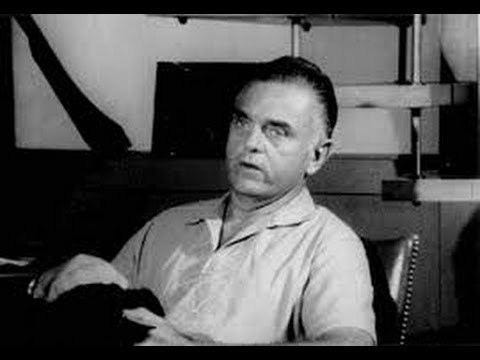
The other significant case of Oswald’s indisputable proximity to strangely-glowing figures is more interesting. The White Russian exile community in Dallas to which Oswald belonged included an eccentric Russian billionaire named George de Morenschildt, who became friends with Oswald. Morenschildt was an oil businessman who cooperated with French intelligence services during World War 2; he traveled in Eastern Europe for ostensible business purposes after the erection of the Iron Curtain, but corresponded with the CIA & gave them intelligence about what he saw there. His business dealings put him into regular association with the Bush family & with the father of William F Buckley Jr.
Oswald & Morenschildt’s friendship appears to have arisen in part from both having weird personalities, but also from a shared interest in politics (although Morenschildt was a vehement anti-communist): both were great haters of General Walker, the John Birch Society-affiliated right wing populist that Oswald attempted to assassinate; at a party after the failed attempt, Morenschildt jokingly asked Oswald why he missed. Everyone in the room laughed, as Oswald stood sweatily. This was the last time Oswald & Morenschildt met.
After the assassination of Kennedy, Morenschildt cooperated closely with Warren Commission investigations & appeared highly morally distraught about his involvement with Oswald. By the late seventies he had became mentally ill, paranoid that he was the victim of a gang-stalking conspiracy perpetrated by intelligence18, and even claimed to interviewers that he had conspired with Oswald to kill Kennedy. Morenschildt ultimately committed suicide after several attempts in the late 70s, in the middle of a series of interviews with a conspiracy theorist about Oswald.
Unlike the Ferrie-Bannister network, whose definitive affiliation with Oswald would strongly support the existence of a conspiracy if proved, George de Morenschildt’s seemingly conspicuous stature can be somewhat plausibly deflated. Morenschildt’s affiliation with the CIA seems like a benign case of cooperation of business with government security during the Cold War; an anti-communist Russian exile would have ample moral reason to provide such information to an opponent of the Soviets. Morenschildt’s friendship with George HW Bush & his family seems typical of any oil businessman in Texas at that time; while it is an amazing circumstance that Bush became CIA director later in life, there is very little to connect him with anything intelligence related at this time (not for want of investigative effort, given the now-dour legacy of the Bush family).
It may certainly strain the disbelief of nearly anyone who reads about Morenschildt’s amazing connections, but if not for the Ferrie-Bannister network, George de Morenschildt alone wouldn’t necessarily suffice to imply a conspiracy surrounding Oswald. If the existence of a conspiracy is granted, however, Morenschildt immediately becomes a prime candidate for involvement.
While it seems unlikely that the wealthy Morenschildt would become friends with the impoverished Oswald, both had innocent & independent cause to live in Texas & be part of the White Russian community there. An interesting counterargument to any particular importance of the Dallas White Russian community, at least as regards Oswald, relies on the fact that George de Morenschildt was the only member who looked kindly on Oswald. The rest of that circle, contemptuous of Oswald’s politically obnoxious personality & violent abuse of his wife, spent much of their time attempting to persuade Marina to divorce him; when they were unable to succeed in this, they ultimately decided to exile the Oswald couple from their community. The conspiracist analysis argues that this exile was a handover of Oswald to Ferrie & Bannister, as Oswald moved to New Orleans not long thereafter; yet, at least prima facie, it seems illogical & inconsistent that such a community, if its secret aim was to observe & manipulate Oswald, would completely cut off their options by exiling him in this way. This is, of course, not a definitive refutation: the community might have ‘forgiven’ him, if necessary, or George de Morenschildt was a conspiracist but the rest were not, or any number of other explanations might exist.
The real relevance of George de Morenschildt, in my view, is that he is the perfect emblem of why conspiracy theories are so eternally prominent: a man with a strangely flamboyant personality, involved with both intelligence & unusually adventuresome businesses (in both cases via affiliation with big name figures), a paranoiac himself who eventually began espousing his own conspiracy theories before a potentially dubious demise. Even if everything to do with David Ferrie, along with every other oddity of this case, were to receive a perfectly rigorous explanation, there is almost no way that any intelligent person could read about Oswald’s hyperpolitical adventures, then about George de Morenschildt & David Ferrie, then about the murders of Kennedy & of Oswald himself by the enigmatic Jack Ruby19, and not suspect that there was at least some manner of mysterious happening afoot. The Warren Report, together with its latter-day improvements by writers such as Posner, can never really be the sole, or at least satisfactory, account in a story such as this.
The Pseudo-Doxology of Conspiracy
Nevertheless, the position that Oswald independently decided to kill Kennedy, and carried it out as is reported in the official narrative, does not seem to be invalidated by any of this information. If there was a conspiracy, it must have consisted in figures like Ferrie observing Oswald & refraining from stopping him, rather than being the prime causal agent of any of his activities. Even then, it’s unclear whether they might have inferred that Oswald would kill specifically Kennedy: the amount of influence & information such a conspiracy would have required, such as dictating that Oswald’s work-shifts align with Kennedy’s motorcade, is so staggering that it seems almost impossible that any kind of deliberate conspiracy could have orchestrated all of this & concealed so much of the evidence.
A more defensible conspiracist position, then, could be that the intelligence plotters of the era did not necessarily act in perfectly intentional ways, but rather cultivated an atmosphere of radicalism & willfully permitted the existence of as many known asset figures & institutions as might be aligned with their interests, perhaps nudging them from time to time. This is the view of the Pseudodoxology parapolitics podcast, hosted by ‘Kantbot’ & ‘Edberg’; in their popular early episode analyzing the Kennedy assassination, they attribute the assassination to an hypothetical Ferrie-Bannister-Morenschildt network overseeing the assassin in this way (even claiming that Oswald was indeed a patsy, and that a separate shooter actually made the killshot20), yet their views developed as their podcast progressed.
For the Pseudodoxology podcast, interest in the Kennedy assassination & Nixon-Watergate fallout led the hosts to similar conclusions as Oliver Stone (that a firm apparatus of military-intelligence covertly control much of the US government), but also drew them to research the business interests which financed intelligence & shadow-government operations. Researching Iran-Contra, as well as the political prominence of the Rockefeller family, led them to investigate the origins of oil trade & industrial wealth in the 19th century; from there, the origins of banking institutions & liberal management of markets led them to the 18th century & earlier, realizing that the entire structure of modernity emerged from social philosophers & political agents of the enlightenment, whose theories were frequently associated with esoteric & magical speculations (such as Leibniz or the Freemasons). Yet, rather than uncovering a demonic plot by other-worldly entities, the Kantbot & Edberg discovered that these arcane trappings were mere fronts to embellish & obscure the apparatus of control that determines the whole world & its power structures today: that is, the inner institutional technics of modernity itself.
By slowly tracing out the activities of clandestine intelligence operations & business schemes back to their earliest historical & theoretical origins, the conspiratorial currents identified in the Pseudodoxology podcast eventually converge with conventional history: the most consequential thing ever done by conspiracy-like agents, those Rockefellers, HW Bushes & J Edgar Hoovers of the world, was to facilitate the creation of things like the US federal bureaucracy, international trade organizations & world-dollarization. Rather than the deployment of assassins or rigging of international elections by the CIA, the most effective source of control by the American government proves to be these institutions of modernity, via their requisite incentives, economic development programs & bipartisan consensi obviating elections & popular movements.

The most effective conspiracy that has determined modernity, then, began not with the founding of the CIA, but rather with the political constructivism of the Enlightenment. The pinnacle of the Pseudodoxology’s parapolitical research culminates in the phrase, “the esoteric is a facade for the pragmatic, the pragmatic is a facade for the esoteric”: the creation of economics, along with its requisite incentives & institutions, was the real source of supernatural power, a slow & highly experimental process that ultimately provided the means for control of all the world in a way that neither magic nor murderous plots ever could. For Marxists like the hosts21, this is the ultimate revelation that history has been a nightmare.
Thus, by the time the Pseudodoxology podcast revisited the Kennedy Assassination in a later episode, their further historical research had suggested too many complications about actors, motivations & historical currents for their original theory to have a clear explanation for who killed Kennedy or why; by this point, the podcasters had shifted to studying the geopolitical & financial interests motivating the construction of what is now known as the neoliberal world order, something for which the Kennedy assassination was perhaps useful (at least in preserving the organizational structure of the CIA) but did not merit actual conspiracy. As far as I can tell, Kantbot & Edberg still maintain there was a conspiracy in this case, but in the context of a paranoid re-evaluation of all modernity & institutions, cases like Oswald & Kennedy nearly become a moot point: the seeds for control of the world & its peoples by the US dollar & liberal bureaucracies were planted long, long before there was a Kennedy, or even a Roosevelt.
I invoke this perspective because it shows another way in which investigating parapolitical conspiracies creates strange but highly compelling viewpoints. Some hold the conspiracy to assassinate Kennedy was so expansive & powerful that its perpetrators must have had an almost divine power to falsify records & conceal the truth, something amounting to sorcerer-like demiurgy; others, like the Pseudodoxology podcast, hold that the structures of modernity are so powerful that they have more control than any conspiracy ever could, with the result that the superficial account of our society is both completely correct & yet apocalyptic in tendency. Both views amount, really, to a political gnosticism, but this does not necessarily invalidate either: it seems tenably true that the bafflingly glowing-in-the-dark biography of Oswald could suggest either a world of demonic-like manipulative covert actors controlling everything, or else a world so full of overt political ideology, strange figures & military violence that the murder of Kennedy would prove inconsequential in its drift towards the dystopian (if such a world can hold together at all). If so, this is an unnerving dilemma.
Conclusion: A Crisis Of Coherency?
One way of recapitulating all these views would be to say that our society already seems so conspiratorial, with its enormous bureaucracies & undeniably pervasive power mechanisms, that the tendency to generate conspiracy theories about it is only natural. A majority of Americans believe that there was some form of conspiracy to kill Kennedy; the electoral impact of theories as facile as “Kennedy would have stopped the war in Vietnam”, or as plausible as “the system is rigged against us lay people”, has likely been profoundly consequential.
If that is so, then consequences of this paranoia-generating tendency of modernity are little better than the conspiracies themselves, or the otherwise alienating social structures, that generate this paranoia in the first place. If the problematic institutions necessarily cause anyone interacting with, or even observing, them to go insane (compare the Socratic maxim that full understanding of the truth is externally indistinguishable from insanity), this poses enormous problems for anyone hoping to effect sensible reform. This holds both in the case of a conspiratorial government, and in that of a normal modern state which merely appears conspiratorial to a disproportionate amount of otherwise regular people. It’s not even clear if it’s easier to reform the latter than the former: it could potentially be less difficult to expose & imprison a discrete number of conspirators (a socially palliative scapegoat moment), than it would be to reform an enormous set of inherently cogitohazardous institutions.
In my article on Delillo’s Libra, a novel which broaches similar themes to those discussed here, I arrived at the question of a potential crisis of coherency. A modern state, whether or not it is a veneer for a clandestine network of conspiracies, seems to inherently engender paranoia & conspiratorial thinking among its subjects, whose schizotypal attitudes can come to have great sway. If institutions are so inherently alienating, then it seems that the eventual horizon of modernity could only produce an exponentiated escalation into incoherency & thereby a totally senseless anarchy. In such a maddening reality, even any actual conspiracies would themselves eventually become dissolved in the selfsame nonsensical delirium: as Joe Pesci playing David Ferrie exclaims in one of the most memorable scenes of JFK (1991): “Who did the President, who killed Kennedy, fuck man! It’s a mystery! It’s a mystery wrapped in a riddle inside an enigma! The fucken shooters don’t even know!”. The ultimate horizon of the political, then, is Nick Land’s famous Meltdown, shorn of its redemptive AI-powered transhumanist potential.
Now, to be a bit more sober for a moment, the palpably intense nature of tales about assassinations & intelligence operations, and those who are delirious about them, do not justify projecting this entire mindset onto society writ large: not every event is so baffling as to render those who study it insane, nor is every person so incompetent that observing modernity will destroy their ability to reason. Indeed, those sensible realists who still make up the vast majority of the functional population would note that the entire structure of the liberal west was designed to restrict the ambition of factionalism (& indeed of conspiracies) through the limits of institutions, and to check the eternally incoherent whims & passionate intensity of the superstitious masses by the coherentizing filter of electoral representation. The west, particularly America, has managed to maintain a remarkably stable society despite the fact that significant chunks, often majorities, of its population have abysmally flimsy (or obstinately contrarian) understandings of the geopolitical, economic & administrative systems which govern the workings of their world. Some could even argue the advancement of logistical & analytical technology have only made the world more orderly, transparent & understandable.
Indeed, the viscerally exciting & paranoia-generating tendency of conspiracies do not suggest that all things will fall apart, but rather that those ensorcelled in such fixations are being drawn away from political & practical society, as so often happens, into effectively apolitical & often reclusive lives of far-flung fantasy & ineffectual speculation (this is to say nothing of the world-denying resentment often accompanying this).
Nevertheless, there is no reason to think that the de-radicalizing & anti-conspiratorial nature of liberal society can last forever (even if one leaves aside the fact that it is wildly unlikely that any large & lasting conspiracy could have real sway outside of limited & quickly exposed cases); substantial eventualities, such as a competency crisis arising from mediocre education systems, or severe destruction of societal order by the victory of deluded radicals in legitimate elections, suggest that there are many ways in which paranoid tendencies could nevertheless topple society writ large. In some cases, like with dubious beliefs about policy effects, the solution could be a matter as simple as vigilantly spreading the truth; in other cases, like that of the Kennedy assassination, which will always look utterly weird & feel viscerally shady even if the truth is totally innocent, it is not so clear how best to quell the paranoid voices everywhere surrounding it. It is likely one of these things that will be quibbled about, every which way, for as long as it remains in cultural memory, and then dissolve into a matter for historians to skim over.
Appendix: Was There A Conspiracy?
In this article I was mostly interested in discussing interesting elements of the Kennedy Assassination; I don’t feel well informed enough to make a complete verdict on the case, nor do I imagine anyone should take me as an authority on the matter. However, to avoid waffling, I will give my general opinion on whether Oswald killed Kennedy, and whether he acted alone in so doing.
I think Oswald was certainly the one who killed Kennedy. I feel about 98 or 99% certain of this; my sliver of doubt consists entirely in the fact that I am so bored by analysis of the gunshot that it is possible I might have overlooked some conspicuous detail involved.
I think Oswald probably acted alone, at a roughly 70% confidence level (by ‘alone’, I mean without any manipulation, willfully negligent observers, &c &c). Of the 30% possibility of conspiracy, I would say that the Ferrie network might have had some limited involvement, such as the possibility that they knew he intended to do it & happily refrained from interfering. The hard evidence of links with Ferrie, I think, does render it possible that Oswald had been manipulated over his entire life; this is, however, very difficult to square with all other good evidence defending the official narrative. Most of the possibilities in the 30% are an utter mystery to me, and my only hope is that better conspiracy theorists, or anti-conspiracists, will come along some day with better answers to these questions.
I learned this joke from the Ezra Klein show, I’m afraid to say.
To avoid confusion, I will exclusively refer to John F Kennedy as ‘Kennedy’ in this article, while I will refer to the film as ‘JFK (1991)’.
This video contains a good summary & refutation of the theories alleged about Oswald & the Kennedy assassination. It’s not as good as Case Closed (the host commits some pretty blatant epistemological errors), and certainly doesn’t go into great depth about the conspiracy theories, but I still feel moved to recommend it because it served well as a comprehensive refresher while revising this article. It’s also an easier way to hear the evidence against conspiracy in a way that doesn’t involve reading a 600+ page book.
As is memorably noted in the scene in Delillo’s Libra set after Oswald’s arrest, he was always known as ‘Lee Oswald’, and referring to him as ‘Lee Harvey Oswald’ is a media phenomenon that began only the assassination.
Posner thoroughly describes nearly every evidenced instance of this in great detail, so as to highlight Oswald’s violent nature; I recommend readers be wary, as I found these sections highly disturbing & depressing to read.
I would recommend, if you are trying to learn about these conspiracy theories, to avoid wasting your time nitpicking over the physical possibility of Oswald’s shots. It is the most mind-numbing & inane stuff ever put to page. A persuasive conspiracy theory about a second shooter could simply say that there was a silencer on the gun, or that Oswald misfired, or any number of other plausible explanations, and not need to worry about these minutiae.
Martin Scorsese’s highly underrated film, The Irishman (2019), not only alludes to the possibility of a mafia assassination of Kennedy, but also features a brief cameo by David Ferrie: Scorsese must know all these theories well himself, which is fun to think about. Despite all this, evidence for mafia involvement is non-existent, and theories that allege it are completely ludicrous.
In my research, which was admittedly fairly limited, the only actual falsehood in Case Closed I’ve found has concerned the photograph of David Ferrie & Oswald together; I discuss this in the ‘Two Strange Figures’ section of this article. The photo, which hadn’t been found by the writing of Case Closed, does directly invalidate several pages Posner devotes to the impossibility of Ferrie & Oswald having met in the fifties.
This is to be stressed: all existing evidence suggests that Kennedy never intended to withdraw from Vietnam, and indeed there is plentiful evidence that he was highly enthusiastic for such a war. He, along with his brother Robert F Kennedy Sr (who was tasked with managing these matters), simply wanted to have more executive authority over how these wars & intelligence operations were litigated. The view that Kennedy had moral objections to clandestine operations or foreign interventions is one of the most baseless popular theories in the public imagination today, and seems to derive exclusively from the fantasies of the Baby Boomers or, at least, the hippies among them.
This election, by official historical accounts, was likely determined by voter fraud in Texas & Chicago, carried out by political machines affiliated with Lyndon Johnson & Mayor Daley. This doesn’t prove anything about conspiracies about the Kennedy assassination or Watergate, but it’s an interesting historical factoid.
Or is it a form of beauty, rather, where the complexities of political society & history become a cogitable & harmoniously simple whole that we can, for once, actually apprehend?
It should be noted that the Ferrie-Bannister operation is not definitively connected to intelligence operations (Bannister had been an FBI agent, but was fired in 1957), but they are much more clearly adjacent to that world than anything else in this saga: they collaborated with CIA-backed anti-Castro guerillas, had seemingly unusual prominence for civilian anti-communist activists & resemble the clandestine service operatives of their era. If their hypothetical conspiracy was totally separate from the CIA & FBI, the conspirators would at least functionally resemble ‘intelligence operatives’ in the popular imagination.
That is, apart from spurious sources, who came forth only in the 70s after these theories were popularized by Jim Garrison. In terms of rigorously acceptable evidence, there is one janitor who says he maybe saw a guy who kind of looked like Oswald once.
Despite chapters spent analyzing the lives of relevant witnesses & irrelevant mafia figures, Cased Closed spends very little time analyzing the activities of Ferrie and other potential conspirators during the leadup to the assassination. This may be in part explained by the fact that the Ferrie connection is often regarded as a highly speculative & unsubstantiated invention by Jim Garrison, and as such would not merit investigation; yet it seems unambiguously the case that Ferrie’s objectively documented intersections with Oswald, as well as his shady status, should merit serious examination.
Oswald was known by some smaller anti-Cuban organizations, one of which assaulted him in a public fight after Oswald had tried to infiltrate them in an incoherent act of espionage; he also managed to appear on a radio-broadcast debate about socialism, where he was humiliated after his opponent exposed his embarrassing one-man ‘organization’ & his abortive defection to Russia.
An interesting counterargument here could be that if Ferrie was a conspiratorial agent manipulating Oswald, why should he let Oswald publicize the address of his headquarters in the Pro-Cuban leaflets? It would not only bring pro-Castro agitators to the office, but also clearly link Oswald to Ferrie. This is of course purely speculative, but taken under this light it does seem like a potential argument against cooperation between Ferrie & Oswald, strangely enough.
The most interesting conspiracist position I’ve seen advanced on this matter is that of Kantbot & Edberg in the Pseudodoxology podcast, who posit that Oswald’s defection may have been facilitated by military personnel for a ‘mole hunt’, intended to find a Soviet spy within the US military, by observing the reactions of suspected individuals after Oswald’s defection (or which sources would repeat the invented intel Oswald offered the Soviets). From what I can tell, there doesn’t seem to be any particularly strong evidence for this (though I’m not certain), but that something like this might have happened seems plausible; this is perhaps compatible, of course, with Oswald having acted completely alone in so doing, with the superior officers either passively benefiting from this scenario, or else only subtly encouraging Oswald. In this latter case, it could even be that this ‘mole hunt’ transpired without any connection to any conspiracy with which Oswald was later involved, amazingly.
The brief exchange of letters he conducted with then-CIA director George HW Bush about this matter is interesting, if saddening, to read; whether the ability to get a reply from the CIA director about private paranoia suggests that Morenschildt possessed an higher-than-supposed level of importance is another question.
I don’t have time to discuss Jack Ruby in depth here. His role is generally explained by the absence of any real connections between him & anything politically (or criminally) relevant, as well as by his demonstrable lack of mental stability; he is quite like Oswald in that regard. I don’t see anything particularly dubious about him. Of course, that those studying the mainstream narrative are asked to accept yet another incredibly unlikely event, by another incredibly bizarre character, all as coincidence, only strengthens my point about the inevitability of conspiratorial thinking about this event.
For reasons, among others, pertaining to the ridiculousness of the bullet-logistics question, which would be necessary for a second shooter hypothesis, I think this take isn’t quite defensible.
I’m not fully sure if Kantbot identifies as such, but Edberg does & writes his own pretty good substack from this perspective.